
Introduction
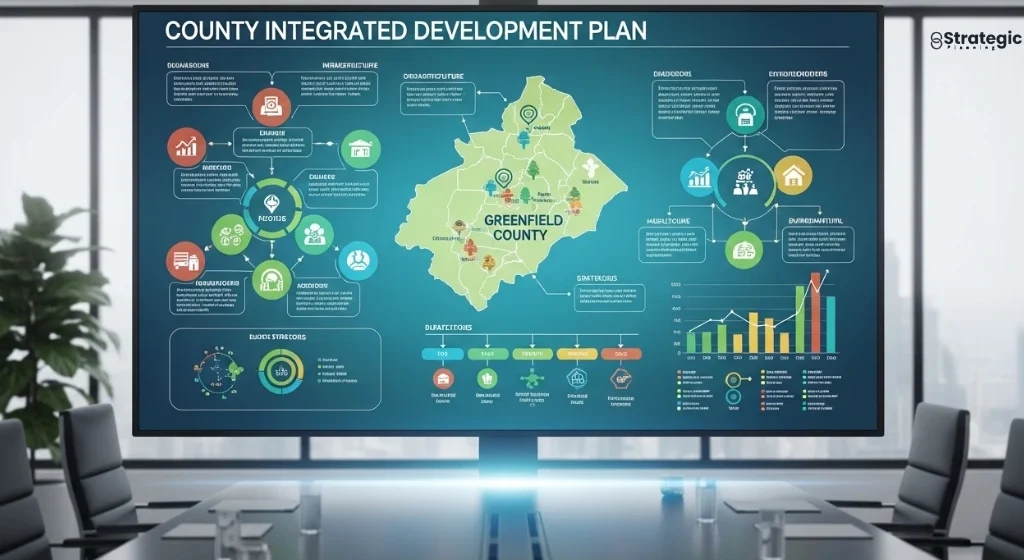
A County Integrated Development Plan (CIDP) is a strategic planning document prepared by county governments to guide development activities over a specific period, usually five years. It is a roadmap that gives the county an idea of how to enhance the lives of the people living there by providing improved infrastructure, social services, economic growth, and developing institutions.
CIDP is primarily aimed at ensuring that the development projects in a county are properly planned, coordinated and in line with the national development objectives. Counties employ it instead of the isolated or unplanned project, which integrates various sectors of health, agriculture, water, education, roads and economic development into a comprehensive plan.
Simply put, the CIDP forms the basis of the county’s developmental planning and budgeting. All the key projects, policies, or investments in any county must be connected to promote transparency, accountability, and effective utilization of the resources of the population.
What is a County Integrated Development Plan (CIDP)?
A County Integrated Development Plan (CIDP) is a legally required development framework used by county governments to plan and manage development activities within their jurisdiction. It gives long-term vision, strategic priorities, and explicit goals to be used during development in all sectors of the county.
The plan covers a wide range of areas, including:
- Economic development
- Infrastructure projects
- Social services
- Environmental management
- Institutional strengthening
Make sure that the various sectors are jointly working rather than operating in isolation. The county governments can achieve this through combining the various sectors into a single plan, eliminating the duplication of projects and maximizing the use of the given resources.
This is normally prepared using a participatory process, implying that the community members, stakeholders, the representatives of the private sector, as well as the civil society organization, are also involved in giving ideas and feedback.
Importance of a County Integrated Development Plan
CIDP is also very instrumental in making sure that there is proper and sustainable organized development at the county level. Without a definite development plan, projects will be introduced in any which way without interaction with the reality of the population’s needs.
Below are some key reasons why it is important.
1. Provides Strategic Direction
It is one of the key functions of offering proper strategic direction to the county government. It outlines long-term objectives and lays emphasis on areas to develop as priorities.
For example, a county may prioritize:
- Improving healthcare services
- Expanding road networks
- Enhancing agricultural productivity
- Promoting tourism and local industries
These priorities help decision-makers focus on projects that will create the greatest impact.
2. Improves Coordination Between Sectors
There are various sectors where development takes place, such as transport, water, health and education. When these sectors are not coupled, there would be overlaps as well as conflicts of projects.
The CIDP will incorporate all sectors in one development root, where one project will complement another and bring about overall development of the county.
3. Guides Budget Allocation
The County Integrated Development Plan is also the base of the annual county budget. The governments utilize it to know where money should be distributed.
As an example, in case it markets healthcare improvement as one of its priorities, the county budget would fund:
- Building hospitals
- Purchasing medical equipment
- Hiring healthcare workers
This ensures that public funds are spent on projects that support the county’s long-term goals.
4. Promotes Accountability and Transparency
Citizens can trace the way the government is spending public funds since it spells out the priorities and projects of developing it clearly.
In case of failure to implement one of the projects in the plan, residents will be in a position to seek explanations from the government. This promotes integrity and good governance.
5. Supports Sustainable Development
A proper Development Plan will ensure that development projects are developed with environmental sustainability, social equity, and economic growth in mind. This assists the counties to have equal development, which has benefited the current generation as well as future generations.
Key Components of a County Integrated Development Plan
The detailed CIDP is typically a set of significant elements of development planning and execution.
1. Vision and Development Goals
The vision of the county is the first element. This is what the county wants to attain within the planning period.
The vision is supported by specific goals such as:
- Reducing poverty
- Improving education levels
- Enhancing economic opportunities
- Expanding infrastructure
These goals provide a clear direction for all development activities.
2. Situational Analysis
The county government undertakes a situational analysis to find out the present situation in motion before making plans for future projects.
This analysis examines areas such as:
- Population size and demographics
- Economic activities
- Infrastructure availability
- Social services
- Environmental conditions
Suchan’s assessment aims to point out the current challenges and development opportunities.
3. Sectoral Development Plans
A County Integrated Development Plan consists of combining the development plans of various sectors in a single document. These sector plans present particular projects and plans for every region.
Examples include:
Health Sector
- Building new health facilities
- Improving maternal healthcare services
- Expanding disease prevention programs
Agriculture Sector
- Supporting farmers with training and technology
- Promoting irrigation projects
- Improving market access for agricultural products
Infrastructure Sector
- Constructing and maintaining roads
- Expanding water supply systems
- Improving electricity access
By combining these sector plans, this ensures coordinated development.
4. Resource Allocation and Budget Framework
Resource allocation strategy is another major part of the CIDP. In this section, the county will outline how it intends to fund its development projects.
Sources of funding may include:
- Government allocations
- Local revenue collection
- Development partners and donors
- Public-private partnerships
The plan also estimates the cost of projects and identifies potential funding gaps.
5. Public Participation
The process includes the involvement of people. Societies are urged to give their opinions and developmental priorities.
This can involve:
- Public meetings
- Stakeholder workshops
- Surveys and consultations
The involvement of the people will help the project to be more developmental because every decision made will be based on what the people need, as opposed to what the government officers decide and implement.
6. Monitoring and Evaluation
Monitoring and evaluation are essential to track the progress of development projects.
It contains performance measures and identifiers that assist in measuring the progress of project delivery of the desired outcomes.
Monitoring activities may include:
- Progress reports
- Performance reviews
- Field inspections
- Impact assessments
This process assists in ensuring that there is efficiency in the use of resources and that development goals are realized.
Purpose of a County Integrated Development Plan
The CIDP has a number of significant functions that promote proper governance and development.
1. Improving Quality of Life
Enhancement of the quality of life of the county residents is one of the main goals. This is the way of offering a better service that includes education, healthcare, clean water and transport.
In the case of good planning of development, communities enjoy better living standards and access to economic opportunities.
2. Efficient Use of Public Resources
Financial resources are scarce, and governments need to be prudent with them. The CIDP will also make sure that resources are invested in priority projects that have the highest benefit to the citizens.
The counties can avoid the waste of money on projects that are not needed or poorly planned by adhering to a clear development plan.
3. Aligning Local and National Development Goals
The CIDP also assures that a national development strategy receives support from the county development efforts.
For example, national plans may focus on:
- Industrial growth
- Food security
- Infrastructure expansion
- Environmental protection
By aligning with national goals, counties contribute to overall national progress.
4. Encouraging Investment
With a good development plan, investors and development partners can easily know the priorities of the county.
The more investors are inclined to fund the projects in the case of the existence of a well-organized CIDP, which reflects opportunities and long-term development programs.
Challenges in Implementing CIDPs
Despite the fact that CIDPs are critical planning tools, counties might encounter several difficulties in the implementation process.
Limited Financial Resources
There are several counties that have small budgets, and this may slow or even halt execution of scheduled projects.
Weak Institutional Capacity
The county governments might even be lacking adequate technical skills to carry out elaborate development projects.
Political Interference
Political shifts in leadership may also result in a change in priorities in development that will impact the delivery of the CIDP.
Inadequate Public Participation
Unless every citizen is fully engaged in the planning process, the CIDP is likely to deliver services that are below the actual needs of the communities.
Conclusion
The County Integrated Development Plan (CIDP) is a critical tool for effective county governance and sustainable development. It offers a mapped-out basis that instructs economic, social, and infrastructural growth within a span of five years.
It makes sure that county governments efficiently use resources by integrating the various sectors, encouraging the masses to participate, and keeping the development in tandem with the national priorities, thus projects will be implemented which would uplift the lives of the people in that county.
Finally, a properly executed strategy contributes to balanced growth, an improved quality of the offered social services, and sustainable development of counties. By planning, monitoring and working with communities and stakeholders, the counties can bring their development vision into place.
FAQs
- What is the main purpose of a County Integrated Development Plan (CIDP)?
The main purpose is to guide the overall development of a county for a period of five years. It helps county governments plan projects, manage resources effectively, and ensure that development activities improve the quality of life for residents. - Who prepares the County Integrated Development Plan?
The county government prepares the CIDP in collaboration with different stakeholders. These may include government departments, community members, private sector representatives, civil society organizations, and development partners. Public participation is an important part of the planning process. - How often is a County Integrated Development Plan updated?
It is usually developed for five years. After the five-year period ends, the county government reviews the previous plan and prepares a new one based on updated development needs and priorities. - Why is public participation important in a CIDP?
Public participation ensures that the development projects included in the CIDP reflect the real needs of the community. It also promotes transparency, accountability, and trust between the government and citizens. - How does the CIDP affect county budgeting?
The County Integrated Development Plan serves as the foundation for annual county budgets. It means that funds are allocated to projects and programs that are already identified in the plan, ensuring that government spending supports the county’s long-term development goals.