
Volunteers are the backbone of countless organizations, community groups, charities, sporting events, festivals, and non-profit initiatives. While volunteer programs can create a significant positive impact, managing large numbers of volunteers efficiently can be a complex task. From recruitment and onboarding to scheduling and communication, coordinators often face challenges that consume valuable time and resources.
As organizations continue to grow and embrace digital transformation, volunteer management software has emerged as a valuable tool for streamlining operations and improving volunteer experiences. These platforms help organizations organize, engage, and support their volunteer workforce more effectively.
In this article, we’ll explore why Volunteer Management Software is becoming increasingly important and how it can benefit both organizations and volunteers.
What Is Volunteer Management Software?
Volunteer management software is a digital solution designed to help organizations oversee every stage of the volunteer journey. These platforms typically provide tools for recruiting volunteers, collecting applications, managing schedules, tracking hours, communicating with teams, and generating reports.
Rather than relying on spreadsheets, emails, and manual processes, organizations can centralize volunteer information in one place, creating a more efficient and organized workflow.
The Challenges of Managing Volunteers Manually
Many organizations begin with simple volunteer programs that can be managed using basic tools. However, as volunteer numbers increase, manual systems often become difficult to maintain.
Common challenges include:
- Scheduling conflicts
- Communication gaps
- Lost or outdated volunteer information
- Time-consuming administrative tasks
- Difficulty tracking attendance and volunteer hours
- Limited visibility into volunteer engagement
Without proper systems in place, coordinators may spend more time managing logistics than focusing on meaningful community impact.
Benefits of Volunteer Management Software
Improved Volunteer Recruitment
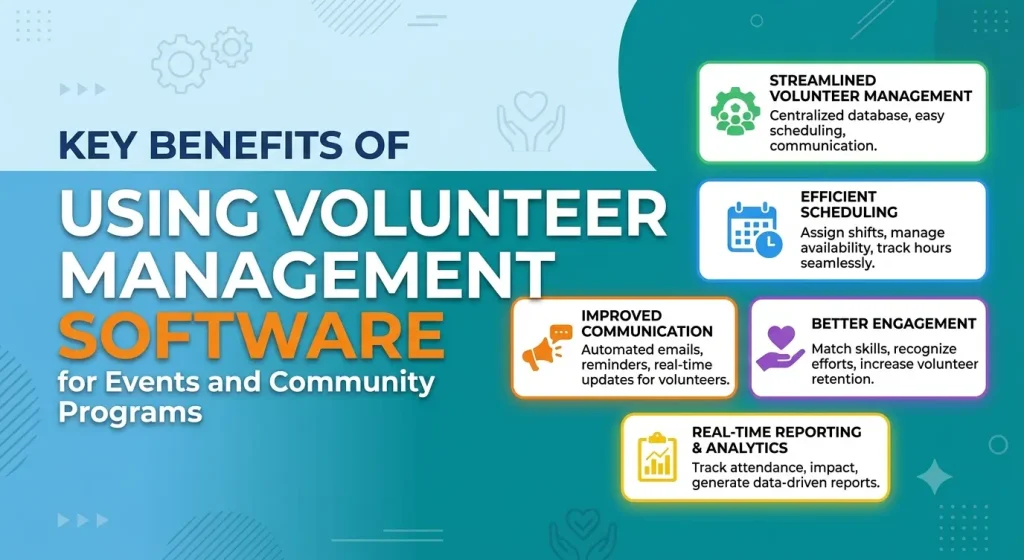
Finding the right volunteers is often the first challenge organizations face. Volunteer management software can simplify recruitment by providing online application forms, registration portals, and automated workflows.
Potential volunteers can easily apply, submit required information, and receive updates throughout the onboarding process. This creates a smoother experience that encourages participation.
Streamlined Scheduling
One of the most valuable features of volunteer management software is scheduling automation.
Coordinators can:
- Create volunteer shifts
- Assign roles based on skills or availability
- Manage event staffing requirements
- Monitor shift coverage in real time
Volunteers can often view available opportunities and select shifts that fit their schedules, reducing administrative workload while increasing flexibility.
Better Communication
Clear communication is critical for successful volunteer programs. Software platforms often include tools that allow organizations to send updates, reminders, announcements, and event information quickly.
Instead of manually contacting individuals, coordinators can communicate with specific groups or entire volunteer teams through a centralized system.
This helps ensure everyone receives important information at the right time.
Enhanced Volunteer Experience
Today’s volunteers expect convenience and accessibility. A positive volunteer experience can significantly improve retention and engagement.
Volunteer management software often provides self-service portals where volunteers can:
- Update personal information
- View upcoming shifts
- Access training materials
- Track completed hours
- Receive notifications
When volunteers feel informed and supported, they are more likely to remain active and committed.
Better Data Tracking and Reporting
Accurate Volunteer Records
Maintaining accurate volunteer records can be challenging when information is stored across multiple systems.
Volunteer management software centralizes key data, including:
- Contact details
- Certifications
- Skills and qualifications
- Attendance history
- Completed volunteer hours
This makes it easier for organizations to access information when needed and maintain compliance with internal requirements.
Measuring Program Success
Data plays an important role in evaluating volunteer programs.
Many software platforms offer reporting tools that help organizations measure:
- Volunteer participation rates
- Hours contributed
- Event attendance
- Volunteer retention
- Program growth over time
These insights can support strategic planning, funding applications, and stakeholder reporting.
Increased Efficiency for Coordinators
Volunteer coordinators often juggle multiple responsibilities, especially during busy events or large-scale programs.
Automation features can reduce repetitive administrative tasks by handling:
- Registration approvals
- Shift confirmations
- Reminder notifications
- Attendance tracking
- Report generation
This allows coordinators to spend more time building relationships with volunteers and less time managing paperwork.
Supporting Large Events and Community Programs
Volunteer management software is particularly valuable for organizations running large events or recurring programs.
Event Management
Major events often require hundreds or even thousands of volunteers across multiple roles.
Software platforms help organizers:
- Allocate volunteers efficiently
- Manage credentials and training
- Monitor attendance
- Handle last-minute schedule changes
This level of organization can significantly improve event operations and volunteer satisfaction.
Ongoing Community Engagement
For organizations that operate year-round, volunteer management software helps maintain long-term engagement.
Regular communication, volunteer recognition, and performance tracking can strengthen relationships and encourage continued participation.
Key Features to Look For
When evaluating volunteer management software, organizations should consider features that align with their specific needs.
Important capabilities may include:
Volunteer Recruitment Tools
Easy-to-use application forms and registration processes can help attract and onboard volunteers more efficiently.
Scheduling and Shift Management
Flexible scheduling tools make it easier to match volunteers with suitable opportunities.
Communication Features
Integrated messaging and notifications help keep volunteers informed and engaged.
Reporting and Analytics
Data-driven insights enable organizations to evaluate performance and make informed decisions.
Mobile Accessibility
Mobile-friendly platforms allow volunteers and coordinators to stay connected from anywhere.
Conclusion
Volunteer programs play a vital role in supporting communities, events, and charitable initiatives. However, managing volunteers effectively requires organization, communication, and efficient processes.
Volunteer management software helps organizations overcome common administrative challenges by streamlining recruitment, scheduling, communication, and reporting. It also enhances the volunteer experience, making it easier for individuals to contribute their time and skills.
As volunteer programs continue to grow in size and complexity, investing in the right technology can help organizations improve efficiency, strengthen engagement, and focus on what matters most—creating meaningful impact within their communities.