What Is Compensation Management Software?
Compensation management software helps large corporations streamline their systems for planning, tracking, and managing employee compensation in bulk — managing employee pay, which includes salaries, bonuses, benefits, and equity.
Usually, companies have to rely on spreadsheets, which makes them more customizable; however, these tools automate repetitive tasks like tracking and managing to improve efficiencies.
For large enterprises that have thousands of employees, compensation management software helps them:
- Track and pay employees fairly
- Manage budgets
- Award employees for career progression
- Manage global compliance
- Integrate with other systems like HR and payroll for more efficiency
Large businesses would be spared the use of spreadsheets. Still, the software needs to be more customizable to enhance efficiencies and minimize errors, delays, compliance requirements, and HR frustrations due to manual work.
Why Large Enterprises Need Compensation Software
No two enterprises are alike, and large enterprises have specific needs that typically available HR tools cannot meet.
1.1 Large Amount of Data to Manage and Complicated Pay Structures
In larger companies, you could have:
- Thousands of employees are dispersed across different countries or regions
- Numerous pay grades and bands
- Salary, bonus, and equity plan requirements
- Sales commissions and incentivized pay
Managing all of this manually is virtually impossible.
1.2 Adhering to Laws in Different Countries
Some requirements that global firms must comply with include:
- Local labor laws of each country
- Regulations that determine pay equity
- Different taxation standards
Compensation tools include built-in compliance mechanisms to address these challenges.
1.3 Consistency and Standardization
These tools ensure that pay decisions are:
- Aligned with company policies
- Consistent across departments
- Fair, defensible, and transparent in case of an audit
Managers are provided with uniform approval workflows that include complete history and documentation.
1.4 Integration With Other HR Systems
Modern compensation software typically integrates with:
- HRIS (Human Resource Information Systems)
- Payroll systems
- Performance management systems
- Budgeting and analytics systems
This supports seamless integration and real-time data with no redundancy.
Key Features
When it comes to large enterprises, knowing the basic features that are crucial to your organization before selecting software is essential.
2.1 Compensation Planning and Budgeting
This includes:
- Salary increases
- Bonus planning
- Long-term incentives (such as RSUs and stock options)
- Variable pay
- Workforce planning
Effective software enables HR teams to develop plans, scenarios, and budgets across divisions and geographies.
2.2 Approval Workflows
Comprehensive compensation structures require:
- Multi-level approvals
- Audit trails
- Role-based access control
The software must facilitate manager self-service, enabling managers to view recommendations and manage approvals within streamlined workflows.
2.3 Pay Equity & Compliance Tools
Large companies should ensure:
- Fair pay across all genders and diverse groups
- Compliance with pay equity regulations
- Proper reporting for audits
Advanced systems provide analytics dashboards for equity gaps and compliance reporting.
2.4 Analytics & Dashboards
Visual dashboards help organizations:
- Track budgets in real time
- Forecast spending
- Identify compensation trends
- Run “what-if” analyses for future cycles
This strengthens compensation planning for both HR and finance teams.
2.5 Integration & API Connectivity
Enterprise compensation tools should integrate with:
- HRIS platforms such as Workday, SAP, and Oracle
- Payroll systems
- Performance management systems
- Benefits administration tools
This eliminates manual data transfers and significantly reduces errors.
2.6 Security & Role-Based Access
Compensation data is highly sensitive; software must include:
- Data encryption
- Single Sign-On (SSO)
- Auditing and activity logging
- Role-based permissions
This ensures corporate confidentiality and protects sensitive employee information.
Top Compensation Management Software for Large Enterprises
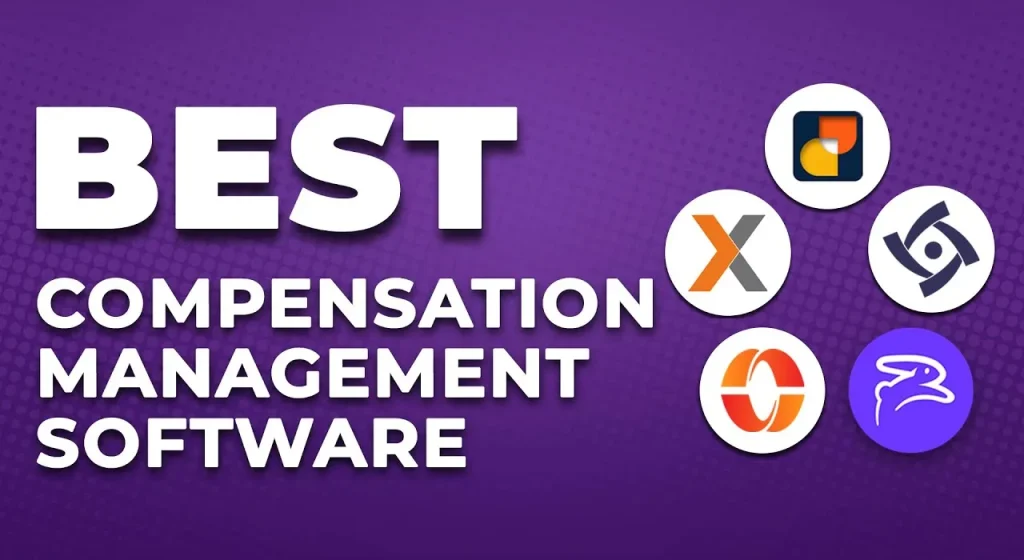
Below is a comprehensive overview of leading compensation management software solutions in 2026, selected based on enterprise-grade functionality, global scalability, compliance features, and automation capabilities.
3.1 Beqom – Enterprise-Grade Compensation & Total Rewards
Overview
Beqom offers a comprehensive compensation cycle system for global companies with complex aftermarket pay systems.
Key Strengths
- Native support for salaries, bonuses, incentives, equity, and long-term plans
- Advanced pay-equity dashboards
- Multi-currency and localization support
- Strong governance and approval workflows
- Deep analytics and reporting capabilities
Ideal For
- Multinational corporations
- Companies with significant sales incentive structures
- Enterprises requiring pay-equity compliance
Pros
- Excellent global scalability
- Broad feature set covering all compensation types
- Powerful analytics and compliance tools
Cons
- Complex configuration
- Longer implementation cycle
Best choice for companies operating across multiple regions that require strong global governance.
3.2 Workday Compensation – Integrated Enterprise System
Overview
Workday offers compensation management as part of its larger HCM suite, tightly integrated with HR, payroll, and finance data.
Key Strengths
- Unified platform covering HR, payroll, performance, and budgeting
- Real-time dashboards for planning and forecasting
- Strong analytics combined with workforce planning
- Native data model ensures accuracy and consistency
Ideal For
- Enterprises already using Workday HCM
- Organizations seeking a single system for HR, compensation, and payroll
Pros
- Strong security and governance
- Seamless data flow with no external integrations needed
- Support for multiple compensation types
Cons
- Customization may require specialists
- Implementation can be lengthy
Best suited for organizations already invested in the Workday ecosystem.
3.3 SAP SuccessFactors Compensation
Overview
SAP provides flexible global compensation management for companies using SAP across HR and finance.
Key Strengths
- Budgeting and modeling with strong governance
- Merit, bonus, and equity planning
- Global market localization
- Integration with performance and talent modules
Ideal For
- Enterprises using SAP HCM
- Organizations linking compensation to performance and talent management
Pros
- Excellent integration within the SAP ecosystem
- Flexible configuration and compliance tools
Cons
- Can feel overwhelming for new users
- Implementation requires extensive planning
A strong choice for SAP-centric enterprises.
3.4 Everstage – AI-Powered Incentive Compensation
Overview
Everstage focuses on sales performance management and incentive compensation at the enterprise level.
Key Strengths
- AI-driven insights and anomaly detection
- Compliance audit logs
- Real-time visibility into global compensation plans
- Drag-and-drop incentive plan builder
Ideal For
- Large sales teams
- Organizations requiring automated incentive plans
Pros
- Modern, user-friendly interface
- Strong integration and customization options
Cons
- Greater focus on incentives and sales compensation than on base salary
Best for enterprises with a strong emphasis on sales compensation.
3.5 FocalReview – Total Compensation Workflow
Overview
Focal Review integrates compensation planning with performance reviews.
Key Strengths
- Automated workflows for salaries, bonuses, and stock awards
- Employee self-service portals
- Visual dashboards for executive reviews
Ideal For
- Organizations want performance and compensation managed together
Pros
- Strong employee engagement features
- Simplifies annual compensation cycles
Cons
- Smaller ecosystem compared to larger enterprise suites
A good option for HR teams seeking easy performance and compensation alignment.
3.6 Additional Enterprise Tools Worth Considering
While the tools above are the most widely recognized, other solutions may suit specific enterprise needs.
Mercer Comptryx
Focuses on benchmarking and workforce analytics for large enterprises.
Carta
Specializes in equity management and cap tables, ideal for companies offering equity compensation.
5. How to Choose the Right Software for Your Enterprise
Choosing the right system depends on several factors.
5.1 Your Current HR Ecosystem
- If you already use Workday, SAP, or Oracle HCM, choosing the compensation module within those ecosystems makes sense.
- If you use multiple systems, prioritize software with strong integration capabilities.
5.2 Compensation Complexity
Ask yourself:
- Do you need equity management?
- Do you pay sales commissions?
- Is global compliance required?
The greater the complexity, the more advanced the tool must be.
5.3 Budget and Implementation Time
Enterprise compensation tools vary widely in cost depending on:
- Features
- Number of users
- Implementation support
- Customization requirements
Enterprise-grade implementations typically take weeks or months.
5.4 Usability and Adoption
The software should be easy enough that:
- Managers actively use it
- HR teams can customize workflows without heavy coding
- Training remains simple
Look for pre-built workflows, manager self-service tools, and strong customer support.
Common Challenges and How to Overcome Them
6.1 Data Accuracy and Integrity
Solution
- Direct integration with HRIS and payroll systems
- Automated data synchronization
- Minimize manual uploads
6.2 User Adoption Resistance
Solution
- Provide training and documentation
- Use intuitive dashboards
- Start with pilot teams
6.3 Cost and ROI Justification
Solution
- Track time saved from manual processes
- Use metrics to demonstrate performance and equity improvements
- Compare results with industry benchmarks
Implementation Best Practices
7.1 Define Clear Goals First
Before purchasing software, clearly define:
- Your compensation cycle
- Roles and responsibilities
- Data sources and ownership
7.2 Map Your Current Processes
Identify existing workflows and gaps so they can be replicated and improved in the new system.
7.3 Train Managers and HR Staff
Develop structured learning paths and hands-on training before go-live.
7.4 Begin With a Pilot Program
Test the software with one business unit before rolling it out enterprise-wide.
Conclusion
In a large organization where the pay structure is complex, compliance is mandatory, and where there is a need for growth in transparency and fairness, the compensation management software is needed.
The analysis of the size of the organization, the complexity of the HR ecosystem, the complexity of the compensation and the future growth plans has to be taken into consideration in selecting the right solution.
The key enterprise solutions are Beqom, Workday, SAP SuccessFactors, Everstage, and FocalReview; they have their strong points, such as global scalability, AI-based automation, and so on, enabling companies to modernize and streamline the process of compensation management.