
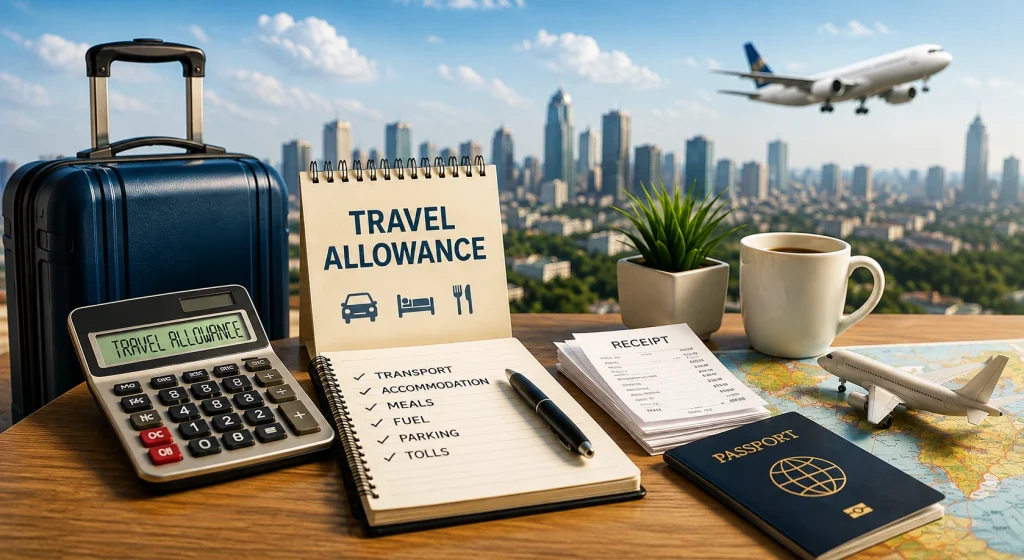
Many jobs involve work travel. Employees attend meetings, visit clients, go to the office, or go on business trips. Also, these trips may require you to pay for transport, lodging, meals, parking, fuel, etc. Many organizations offer a travelling allowance to help them with these costs.
One of the widely spread employee benefits provided by private industries, government agencies, and international organizations is a travelling allowance. It assists employees to avoid travelling costs not provided for by their employers and allows travel to be cost-effective and convenient for business purposes.
Regardless of your role as an employee, employer, freelancer, contractor or business owner, knowing how a travelling allowance works could help you to keep travel costs under control. The policies vary from one organization to another, depending on whether they offer a set allowance or whether actual expenses are to be reimbursed. Understanding these distinctions can prove valuable, as it can save time, minimize confusion and aid in your financial decisions.
This is an extensive compilation of all the information that you have to know about travelling allowance definition, types, eligibility, benefits, calculating the allowance, tax implications and best practices. At the end of this article, you’ll know just how travelling allowance works, and just how you’ll be able to maximize its benefits.
What Is Travelling Allowance?
Travelling allowance comes from an employer and/or organization to help cover travel costs relating to business-related activities. Business travel is paid for from the employee’s account, not the company/employer account.
A generously remunerated travelling allowance is available to assist in covering the cost of travel associated with work. This can cover any costs incurred while traveling, meals, lodging, mileage, parking, tolls and more according to the employer’s policy.
Suppose that one of the workers goes to another city for a business function. The appropriate company might give him the travelling allowance, which involves the expense of traveling, lodging, meals and local traveling.
The allowance is paid before or at the end of the trip, after receipt of the receipts and employees’ reports have been completed.
Why Is Travelling Allowance Important?
Travelling for work can become expensive. Even short business trips involve transportation costs, meals, and parking fees. Without financial support, employees may hesitate to travel or experience unnecessary financial stress.
Travelling allowance provides several important advantages:
- Reduces out-of-pocket expenses
- Encourages business travel
- Supports employee productivity
- Improves job satisfaction
- Makes expense management easier
- Ensures fair compensation for travel
- Promotes transparency between employers and employees
For employers, offering a travelling allowance also demonstrates professionalism and supports business growth by enabling employees to travel confidently when required.
Who Can Receive Travelling Allowance?
Travelling allowance is not limited to one profession. Many different workers may qualify depending on their organization or contract.
Employees
Employees who travel for meetings, training sessions, conferences, client visits, inspections, or business assignments often receive travelling allowance.
Example
A sales representative who visits customers every week may receive mileage reimbursement or a monthly travel allowance.
Government Employees
Government organizations also provide travelling allowance to employees when they travel for official work, such as attending meetings, visiting project sites, carrying out inspections, or completing field duties. The amount usually depends on the organization’s travel policy, the distance travelled, the employee’s position, and how long the trip lasts.
Business Owners
Business owners may travel for meetings, supplier visits, or business events. They can claim these travel expenses if they are related to their business. Keeping all receipts and travel records makes it easier to manage expenses and prepare tax reports.
Freelancers
Freelancers sometimes travel to meet clients or attend industry events.
Although they may not receive an employer-paid travelling allowance, they can often include legitimate business travel expenses in their accounting records, depending on local tax rules.
Consultants
Professional consultants regularly travel between client locations.
Many consulting agreements include travel allowances or expense reimbursement clauses.
Types of Travelling Allowance
Not all travelling allowances work the same way. Organizations choose different methods depending on their policies and business requirements.
1. Fixed Travelling Allowance
A fixed travelling allowance is a predetermined amount paid regularly regardless of the exact travel expenses.
Advantages
- Easy budgeting
- Simple payroll processing
- Predictable employee income
Disadvantages
- May not cover actual expenses
- Employees may spend more than the allowance
2. Mileage Allowance
Mileage allowance compensates employees based on the distance travelled using their personal vehicle.
Instead of reimbursing fuel receipts alone, employers pay a specific amount for each mile or kilometer travelled.
Mileage allowance often includes costs such as:
- Fuel
- Vehicle maintenance
- Tire wear
- Insurance contribution
- Vehicle depreciation
3. Daily Travel Allowance
Some employers pay employees a fixed daily amount while travelling for business.
This allowance usually covers:
- Meals
- Local transportation
- Small incidental expenses
Employees may not need to submit receipts for every small purchase if company policy allows a standard daily allowance.
4. Per Diem Allowance
A per diem is a daily allowance provided for business travel.
Instead of reimbursing every receipt individually, employers pay a fixed daily rate covering expenses such as:
- Breakfast
- Lunch
- Dinner
- Hotel
- Local transport
Per diem simplifies expense management for both employers and employees.
5. Business Travel Allowance
Business travel allowance covers longer work-related trips that require travel outside the employee’s usual work location.
Typical expenses include:
- Flights
- Hotels
- Airport transfers
- Meals
- Taxi fares
- Conference registration
- Business communications
6. International Travelling Allowance
International business travel often requires higher allowances because overseas travel is generally more expensive.
It may include:
- Airfare
- Visa fees
- Currency exchange costs
- Accommodation
- International transportation
- Daily meals
- Internet charges
- Travel insurance
7. Local Travel Allowance
Employees travelling within the same city may receive a local travelling allowance.
It often covers:
- Taxi
- Ride-sharing services
- Metro
- Bus
- Fuel
- Parking
What Expenses Does Travelling Allowance Cover?
The exact expenses covered depend on company policy, but most travelling allowance programs include the following:
Transportation
Transportation is usually the largest travel expense.
It may include:
- Flights
- Trains
- Buses
- Taxis
- Ride-sharing services
- Rental cars
Fuel Costs
Employees using personal vehicles may receive reimbursement for fuel or mileage.
Keeping fuel receipts is recommended whenever required by company policy.
Hotel Accommodation
For overnight business trips, employers generally cover reasonable accommodation expenses.
Luxury hotels may require prior approval depending on company policy.
Meals
Business travel often includes meal allowances.
These may cover:
- Breakfast
- Lunch
- Dinner
- Snacks during long trips
Some organizations provide fixed meal allowances while others reimburse actual costs.
Parking Fees
Parking charges incurred during official business travel are commonly reimbursed.
Employees should retain parking receipts whenever possible.
Toll Charges
Road tolls are another common travel expense included in many travelling allowance policies.
Electronic toll statements may also serve as proof of payment.
Public Transportation
Employees who use buses, trains, subways, or trams for business travel are often reimbursed for these expenses.
Public transportation is frequently encouraged because it can reduce overall travel costs.
Internet and Communication
During extended business trips, employers may reimburse reasonable internet or phone expenses needed for work.
Examples include:
- Mobile data
- Hotel internet
- Business phone calls
How Is Travelling Allowance Calculated?
Often one of the most popular questions that employees have is, “How does the travelling allowance for a job get computed? This will be decided by the travel policy of the employer. Some employers require a flat payment, and others may reimburse your expenses or use mileage/daily rates to determine the allowance.
These calculation methods help employees understand how much they can claim for business travel.
1. Fixed Allowance Method
Under this method, an employer pays a fixed amount regardless of the actual travel expenses.
Example
An employee receives $300 per month as a travelling allowance. Whether they spend $250 or $320, they still receive the fixed amount unless the company has additional reimbursement policies.
Advantages
- Easy to manage
- Predictable monthly payment
- Minimal paperwork
Disadvantages
- May not reflect actual travel costs
- Employees may spend more than the allowance
2. Mileage-Based Method
Many organizations reimburse employees according to the distance travelled.
Formula
Mileage × Approved Rate = Travelling Allowance
Example
Distance travelled: 250 miles
Mileage rate: $0.67 per mile
Travelling allowance:
250 × 0.67 = $167.50
This method is popular because it pays employees based on the actual distance they travel for work. It also helps cover costs like fuel, vehicle maintenance, and regular wear and tear.
3. Actual Expense Method
Employees pay for travel expenses during their trip and later submit receipts for reimbursement.
Typical reimbursable expenses include:
- Airfare
- Hotel accommodation
- Taxi fares
- Fuel
- Parking
- Toll fees
- Meals
- Public transportation
Employers review the submitted expenses before approving reimbursement.
4. Per Diem Method
Instead of reimbursing every receipt, employers pay a fixed daily amount.
Example:
Daily allowance: $90
Business trip:
3 days
Travelling allowance:
3 × $90 = $270
Per diem simplifies accounting and reduces paperwork for both employers and employees.
Factors That Affect Travelling Allowance
Several factors determine how much travelling allowance an employee receives.
Travel Distance
Longer journeys generally receive higher allowances.
Duration of Travel
Overnight trips usually cost more than same-day visits.
Destination
International travel often requires larger allowances than domestic travel.
Transportation Method
Expenses vary depending on whether employees travel by:
- Personal vehicle
- Rental car
- Airplane
- Train
- Taxi
- Public transport
Company Policy
Every organization has different travel rules.
Some reimburse every expense.
Others only pay fixed allowances.
Travelling Allowance vs Travel Reimbursement
Many people confuse these two terms Travelling Allowance and Travel Reimbursement.
Although they are closely related, they work differently.
| Travelling Allowance | Travel Reimbursement |
| Fixed payment | Actual expenses paid back |
| May not require receipts | Receipts usually required |
| Paid before or after travel | Usually paid after travel |
| Predictable amount | Depends on actual expenses |
| Easier payroll management | More accurate expense tracking |
In simple words:
Travelling allowance provides money for travel.
Travel reimbursement repays money already spent.
Travelling Allowance vs Mileage Allowance
Mileage allowance is actually one type of travelling allowance.
| Travelling Allowance | Mileage Allowance |
| Covers different travel expenses | Covers vehicle travel only |
| May include hotels and meals | Covers driving expenses |
| Multiple calculation methods | Distance-based calculation |
| Suitable for all travel | Best for personal vehicle use |
Travelling Allowance vs Per Diem
Per diem is another travel payment method.
| Travelling Allowance | Per Diem |
| Can cover many expenses | Daily fixed payment |
| May require receipts | Usually no receipts for meals |
| Flexible | Standard daily rate |
| Different calculation methods | Same rate each day |
How to Claim Travelling Allowance
Claiming travelling allowance is usually straightforward if you keep proper records.
Step 1: Understand Company Policy
Read your organization’s travel policy before travelling.
Know:
- Eligible expenses
- Spending limits
- Required documents
- Approval process
Step 2: Keep Every Receipt
Always save receipts for:
- Hotels
- Fuel
- Parking
- Flights
- Meals
- Taxi rides
- Toll fees
Digital receipts are often accepted.
Step 3: Record Your Journey
Maintain a travel log including:
- Date
- Destination
- Purpose
- Distance travelled
- Transportation used
This information supports your claim.
Step 4: Complete the Expense Report
Fill out the company’s travel claim form accurately.
Include:
- Total expenses
- Receipts
- Mileage records
- Business purpose
Step 5: Submit Before the Deadline
Many organizations require travel claims within a specific time.
Late submissions may delay payment.
Best Practices for Employees
Employees can make the claiming process easier by following these simple tips.
Plan Your Travel
Book transportation and hotels early whenever possible.
Early bookings often reduce costs.
Stay Within Company Limits
Avoid unnecessary luxury expenses unless approved.
Use Digital Expense Apps
Expense tracking applications make organizing receipts much easier.
Keep Backup Copies
Store digital copies of important travel documents.
Submit Claims Quickly
Prompt submission speeds up reimbursement.
Best Practices for Employers
Employers also benefit from clear travel policies.
Good travel policies should include:
- Approved expense categories
- Spending limits
- Mileage rates
- Documentation requirements
- Claim deadlines
- Approval process
Clear policies reduce confusion and improve compliance.
Common Mistakes to Avoid
Many travelling allowance claims are delayed because of avoidable mistakes.
Losing Receipts
Missing receipts can delay approval.
Claiming Personal Expenses
Only business-related expenses should be claimed.
Incorrect Mileage
Always record accurate distances.
Late Submission
Submit expense reports on time.
Ignoring Company Policy
Always follow employer guidelines before making travel bookings.
Real-Life Examples
Example 1
Sarah travels 150 miles to meet a client.
Her employer reimburses mileage.
Mileage rate: $0.67
Allowance:
150 × $0.67 = $100.50
Example 2
David attends a three-day conference.
Expenses include:
Hotel: $420
Meals: $180
Taxi: $90
Parking: $35
Total travelling allowance:
$725
Example 3
Emma receives a fixed monthly travelling allowance of $250.
Her monthly travel expenses average $220.
She keeps the remaining $30 according to company policy.
Is Travelling Allowance Taxable?
A common question asked is whether the travelling allowance is deemed taxable. Whether the payment is taxable depends on the tax laws of your country and what you’re paying it for.
In some states, there is a rule that the amount of the travelling allowance, meeting the local regulations and provided with proper documentation, may not be taxed if it’s taken to spend exclusively for the purpose of conducting business. If an allowance amounts to extra income without any requirement to travel on behalf of the business, or no documentation, then it could be treated as taxable income to the individual.
Employees should always:
- Check their employer’s travel policy.
- Keep receipts and travel records.
- Understand local tax regulations.
- Consult a tax professional if they are unsure.
Employers should clearly define whether travel payments are reimbursements, allowances, or taxable benefits.
Advantages of Travelling Allowance
A well-designed travelling allowance policy benefits both employees and employers.
Benefits for Employees
Reduces Personal Expenses
Employees do not have to pay for business travel from their own pocket.
Improves Financial Security
Travel costs can quickly add up. A travelling allowance ensures employees are not financially burdened while performing work-related duties.
Encourages Business Travel
Knowing that expenses will be covered makes employees more willing to travel for meetings, training, and client visits.
Saves Time
Employees spend less time worrying about travel costs and can focus on their work.
Increases Job Satisfaction
Fair travel compensation improves employee morale and strengthens trust between employees and employers.
Benefits for Employers
Better Expense Management
A structured travelling allowance policy makes budgeting easier.
Improved Productivity
Employees can travel whenever needed without financial concerns.
Professional Business Operations
Organizations with clear travel policies appear more organized and employee-friendly.
Easier Financial Planning
Fixed travel allowances help companies forecast travel expenses more accurately.
Supports Business Growth
Business travel often leads to new clients, partnerships, and opportunities.
Challenges of Travelling Allowance
Although travelling allowance offers many benefits, there are some challenges.
Rising Travel Costs
Fuel, accommodation, and transportation costs change frequently.
Policy Misunderstandings
Employees may misunderstand which expenses are covered.
Missing Documentation
Lost receipts can delay reimbursements.
Fraudulent Claims
Without proper approval processes, organizations may receive inaccurate expense claims.
Administrative Work
Reviewing travel claims requires time and resources.
Tips for Managing Travelling Allowance
Whether you are an employee or employer, these tips can make travel expense management easier.
- Create a clear travel policy.
- Keep every receipt.
- Use digital expense-tracking apps.
- Submit claims on time.
- Record mileage accurately.
- Separate personal and business expenses.
- Plan business trips in advance.
- Review travel budgets regularly.
Frequently Asked Questions (FAQs)
What is travelling allowance?
Travelling allowance is money paid by an employer or organization to help cover expenses incurred while travelling for work-related purposes.
Who can receive travelling allowance?
Employees, government workers, consultants, freelancers, contractors, and business owners may qualify, depending on their organization’s policy or contract.
What expenses are covered by travelling allowance?
It may include:
- Transportation
- Fuel
- Hotel accommodation
- Meals
- Parking
- Toll charges
- Public transport
- Taxi fares
- Business communication expenses
The exact coverage depends on the employer’s travel policy.
How is travelling allowance calculated?
It can be calculated using different methods, including:
- Fixed monthly allowance
- Mileage-based calculation
- Per diem (daily allowance)
- Actual expense reimbursement
Is travelling allowance the same as travel reimbursement?
No. Travelling allowance is usually a fixed amount provided for business travel, while travel reimbursement repays employees for the actual expenses they have already incurred.
Is mileage included in travelling allowance?
Yes. Many organizations include mileage allowance as part of their travelling allowance policy when employees use personal vehicles for business travel.
Do I need receipts to claim travelling allowance?
It depends on your employer’s policy. Reimbursement-based systems usually require receipts, while fixed allowances or per diem payments may not.
Can freelancers receive travelling allowance?
Freelancers generally do not receive a travelling allowance from an employer, but they can often claim eligible business travel expenses for accounting or tax purposes, depending on local laws.
What is a travel policy?
A travel policy is a document that explains:
- Eligible travel expenses
- Spending limits
- Approval process
- Documentation requirements
- Claim procedures
Why is travelling allowance important?
Travelling allowance helps employees avoid paying business travel expenses themselves while enabling employers to manage travel costs fairly and efficiently.
Key Takeaways
- Travelling allowance helps cover work-related travel expenses.
- Different organizations use different calculation methods.
- Policies vary by employer and country.
- Proper documentation makes the claim process easier.
- Understanding your employer’s travel policy helps avoid claim delays.
- Good travel management benefits both employees and employers.
Final Thoughts
A traveling allowance is not only a financial advantage, but a crucial aspect of the way business is conducted today. A structured travel allowance makes all travel related to the work financially viable and professionally arranged, whether for reaching out to clients, attending conferences, visiting project sites or training programs.
For workers, it offers them peace of mind, enabling a business trip to the UK from abroad to be tax- and benefit-free for them. For employers, it provides a level, fair and streamlined way to manage travel spending that takes a collaborative approach to enhancing productivity and business expansion.
Always check your organization’s travel policy before traveling, be aware of what expenses are approved and be sure to record accurate travel information. By doing so, you’ll be able to file travel claims on a timely and successful basis, and avoid needless delays.
Understanding how travelling allowance could work is an essential term for professionals and staff in all industries due to the evolving workplace and flexibilities in business travel.